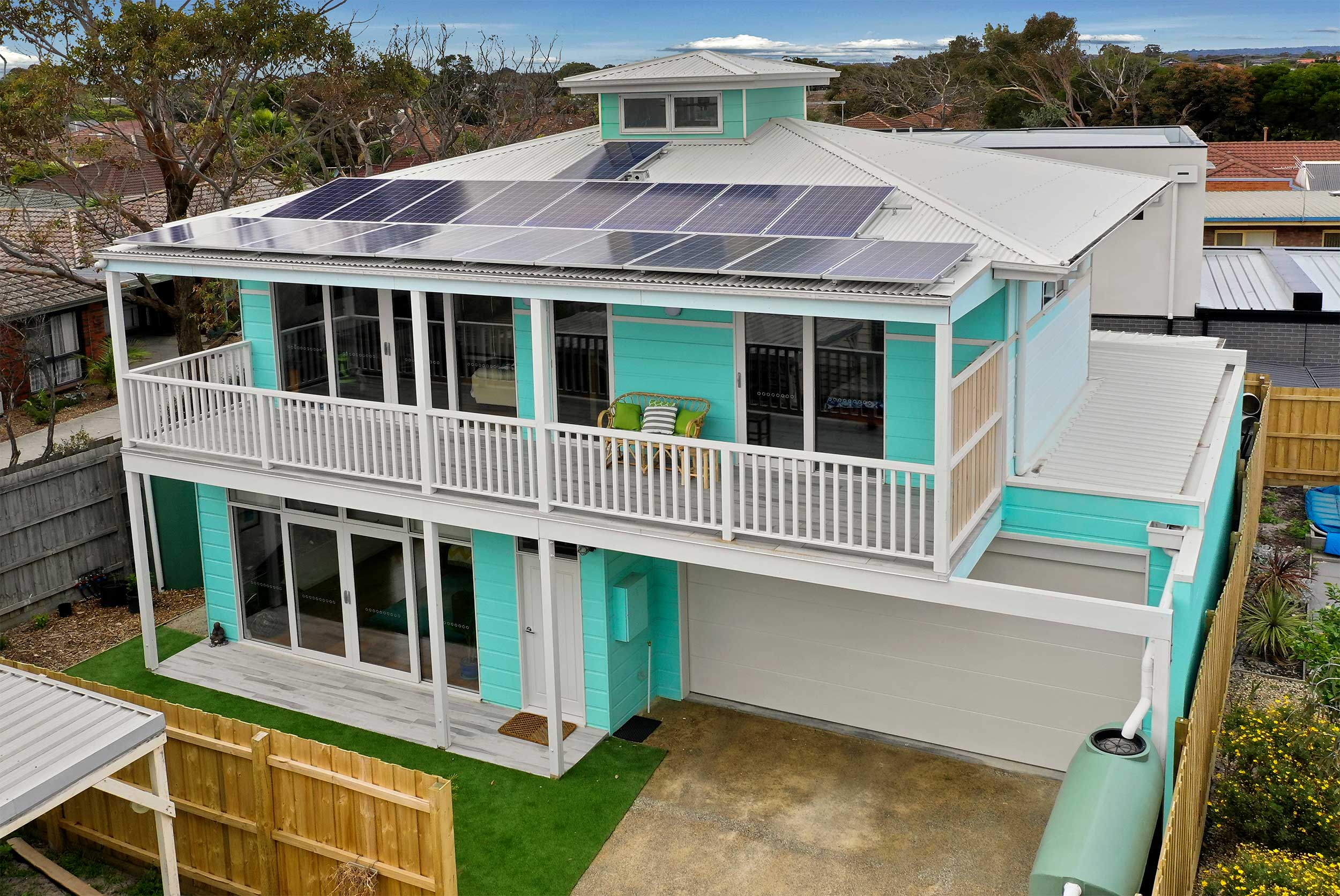
This unassuming new beach home is an energy conversion machine, generating more energy than it uses.
It is a Zero carbon home.
Type:
New Build
Features:
Passive House certified design
Airtight construction with controlled ventilation
Solar panel system
Heat Recovery Ventilation (HRV) system
Open plan living areas
Double glazed windows
The design was conceived, from the outset, to be efficient, light-filled, comfortable and spacious for easy laid-back living. As Passive House members, Green Living Master Builders and long-time proponents of passive and efficient design, this home is the culmination of design and building knowledge distilled by the Capital Building design team over the last twenty years. This Capital (prototype) home uses passive and active design methods and appliances to achieve a delightfully efficient proposition.
Capital Design ethos ‘less rooms but bigger rooms, equals more useable space’.
In the end, all this effort is about comfortable living in a pleasant living environment at an affordable cost. The owners are absolutely delighted with the performance of their new home and added their own personality at the design stage. They had input on the layout, façade, colours, selecting fresh casual finishes such as Russian Birch cupboards and recycled Aussie hardwood tops and floors, mosaic tiles and coastal timber look tiles reflecting the casual cool of a beach shack.
Passive design is shorthand for the building fabric (floor, roof, walls and windows) and its ability to maintain a constant and comfortable temperature achieved by certain design choices. Once in place, these building elements (orientation, materials etc.) are set and hard to change; hence passive. Therefore every building element needs to be viewed in this context at the design stage.
Windows are the biggest weakness of the building fabric. Even well sealed double glazed units are only about ½ as well insulated as a well-insulated wall. Windows were thus kept to a minimum; to the South, East and West.
However, windows are able to generate heat for the home in winter and provide good light, if they are north facing. Consequently, this design orients all living areas to the North, drawing in unlimited light year round and generating heat from winter sun, while shading the home from Summer sun with generous eaves and balconies.
The living areas are open plan and spacious, flowing on to the main garden courtyard area. This provides an uncongested floorplan even for large gatherings. In keeping with an open plan concept, it was decided not to have a separate butler’s pantry. Instead, the laundry/pantry was placed next to the kitchen and doubled in size with matching cupboards for a best of both worlds as a result.
Equally, the upper lounge / office area, with skillfull use of a dividing curtain, converts to a 3rd bedroom for occasional visitors.
Nine foot high ceilings throughout the home add a sense of space and quality.
Having only touched on some of the passive design elements there are of course many more incorporated in this design and too many to mention here.
Many of the materials, such as roof, floor and wall materials were chosen for their cost and thermal efficiencies, low energy footprint and durability.
Great care was also taken to make the home as airtight as possible. Uncontrolled drafts cause cold houses in Winter and hot houses in Summer. Unfortunately, airtight homes create the problem of generating unwanted condensation and stale air, which can cause mould and lack of oxygen. To avoid this, this Beach home is constantly ventilated with fresh, filtered air via a Heat Recovery Ventilation unit (HRV is a Fan box with heat exchanger ducted throughout the house). HRV keeps the home at a constant temperature with little or no extra heating inputs, on most days. The HRV is around 90% efficient at maintaining temperature and uses very little energy. Providing the house is correctly ventilated when the temperature is between 15 and 25 degrees the HRV system will then maintain that temperature for up to 24 hours after the house is again sealed.
On days when the weather is perfect, windows and doors are open, the lantern light skylight, above the central stairwell, can be auto opened to supercharge the airflow (chimney effect) to take advantage of cool changes.
Even though a lot of effort has been made on the passive design elements to make the home efficient it would be almost impossible to make it zero carbon, at least in a practical, useable sense using passive design elements only.
Active design elements and appliances help meet the zero carbon goal without overcomplicating on passive elements. Eventually, there will be automated systems which can utilise the thermal energy of the building fabric. For now, solar panels are the cost-effective, easy solution and were used by Capital to bring this home up to carbon neutral standards.
When you generate your own energy, there’s no use using anything other than electric appliances. Continuing along the theme of resource conservation, the house is suitable to be built on a small land size of 250 m2 and has its own separate mains water supplied by 10 thousand litres of filtered rainwater from 4 tanks.
Behind the understated facade and cool living spaces hides a truly high-performance home. If you are committed to quality, healthy, energy saving living for your family, contact Capital Building Contractors for your custom designed home of the future.
Want a roadmap to extending your home? This brochure has everything you need to know before you start.
Discover design inspiration, budgeting, finishes & materials, contracts & permits, the construction process and more.
Building an extension or renovating is one of the biggest purchases in our lifetime. Therefore, it is essential that before going ahead with a project you can trust the building company that you choose. Capital Building has an impressive list of credentials which means that should you choose it, you will be using a trusted, experienced, honest and safe building operator.